Booking Everest Base Trek
Everest Base Camp Trek: The Ultimate Himalayan Adventure
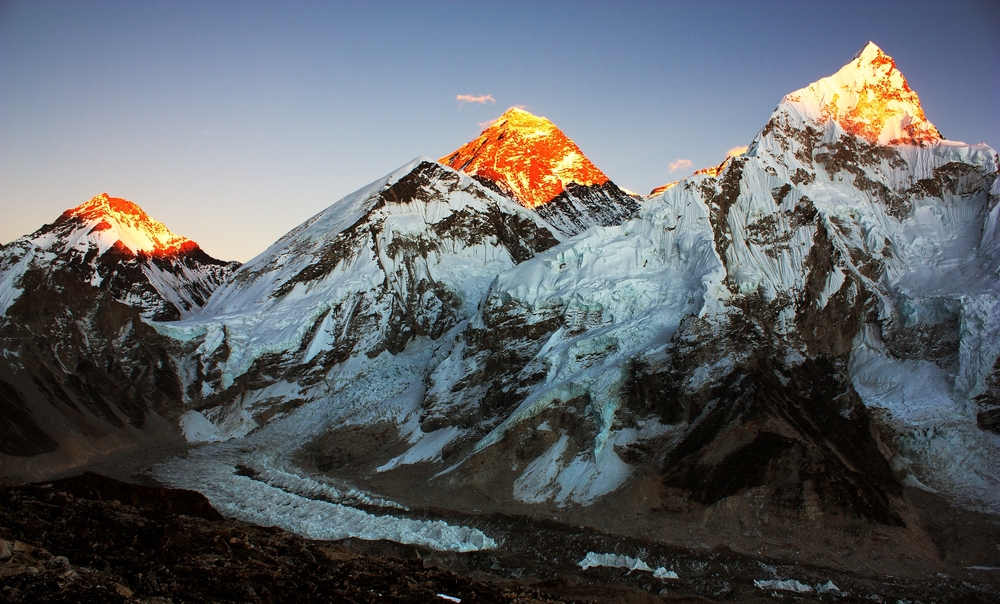
The Everest Base Camp (EBC) Trek is one of the most iconic and sought-after trekking routes in the world, offering adventurers a chance to stand face-to-face with the highest peak on Earth, Mount Everest (8,848.86 meters). This exhilarating journey takes trekkers through breathtaking Himalayan landscapes, traditional Sherpa villages, and provides an unforgettable cultural experience in the heart of the Khumbu region of Nepal.
Geography and Landscapes
The Everest Base Camp trek starts with a scenic flight from Kathmandu to Lukla—the gateway to the Everest region. From there, trekkers follow a trail that passes through lush forests, rivers, and suspension bridges, ascending gradually through various altitudes. Along the way, trekkers encounter some of the most stunning views of Everest, Lhotse, Nuptse, and Ama Dablam.
The trek’s final destination, Everest Base Camp, sits at 5,364 meters (17,598 feet) and offers spectacular views of the Khumbu Icefall, the starting point for climbers attempting to summit Everest. Additionally, a hike to Kala Patthar (5,545 meters) provides the best vantage point for panoramic views of Mount Everest and the surrounding peaks.
Cultural Experience
The Everest region is home to the Sherpa people, renowned for their mountaineering skills and warm hospitality. Along the trail, trekkers stay in traditional teahouses, offering insight into Sherpa culture and Buddhism. Visiting monasteries like the famous Tengboche Monastery (the largest in the Khumbu region) adds a spiritual dimension to the trek. The rich cultural interactions and the Sherpa way of life make the Everest Base Camp trek not only a physical journey but also a deeply cultural and spiritual one.
Flora and Fauna
The trek passes through the Sagarmatha National Park, a UNESCO World Heritage Site, rich in biodiversity. As trekkers ascend from lower altitudes, they pass through rhododendron forests, pine groves, and alpine meadows. Wildlife in the region includes the Himalayan tahr, musk deer, and various bird species like the colorful Himalayan monal. The higher elevations feature stark, rocky landscapes as trekkers approach the base camp.
Trek Difficulty and Preparation
Most trekking itineraries include rest days at key points such as Namche Bazaar (3,440 meters) and Dingboche (4,410 meters) to help with acclimatization. Trekkers must be well-equipped with appropriate gear, including thermal clothing, trekking poles, sturdy boots, and medical supplies for altitude-related symptoms.